CodeSphere
A browser-based integrated development environment unifying real-time collaboration, Git-style version control, and AI-powered coding assistance. It creates a seamless 'VS Code in the browser' experience for pair programming and remote teams.
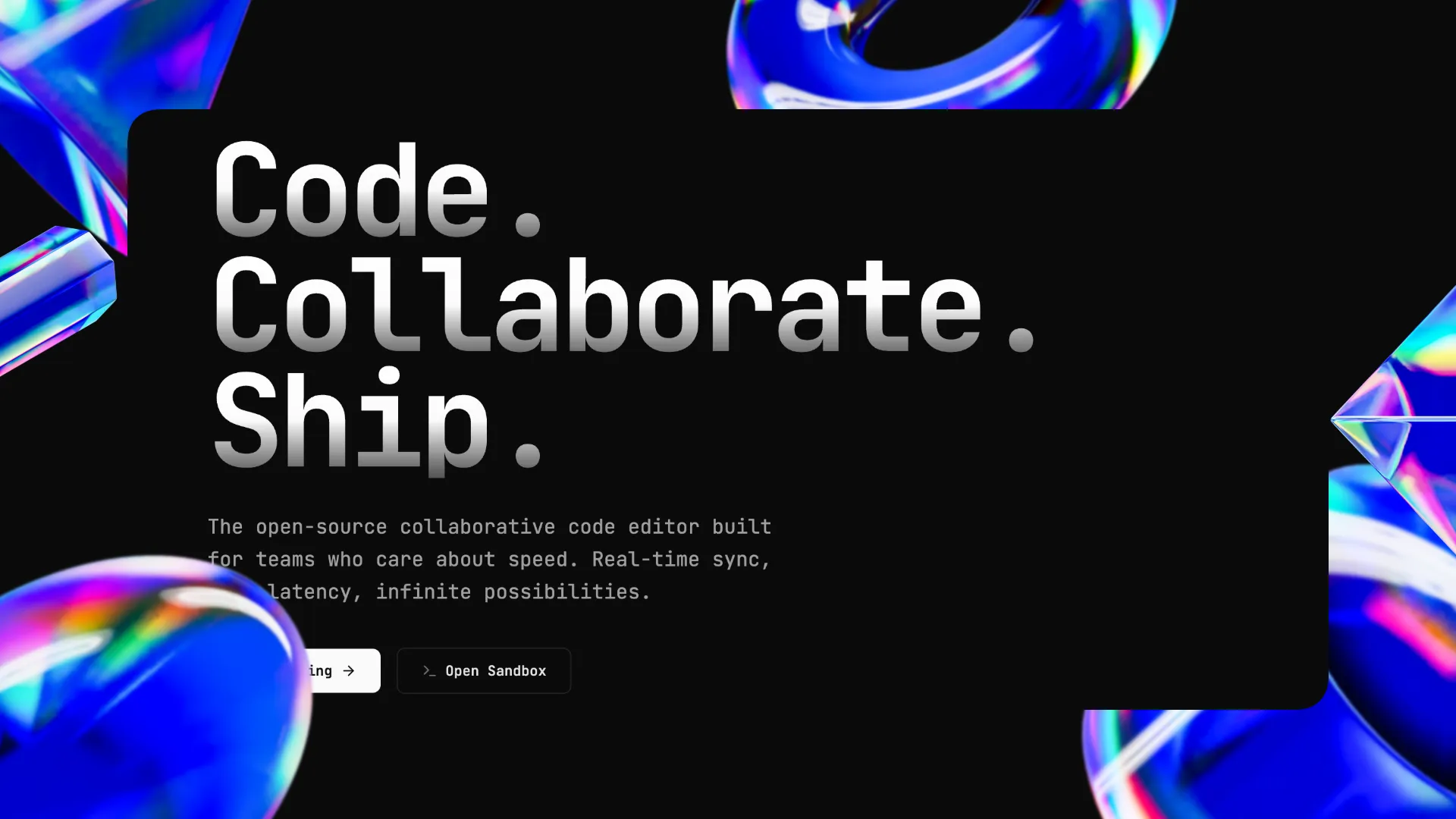
CodeSphere: Real-time collaborative IDE with AI integration
Overview
CodeSphere is a full-stack web IDE designed to address the complexities of cloud-based development environments. It leverages a service-oriented approach to handle sub-millisecond state synchronization between multiple users. By integrating the Monaco Editor with a custom WebSocket architecture, it replicates the fidelity of local development while adding cloud-native capabilities like presence detection and voice communication.
The Challenge
Standard online editors often suffer from high latency during multi-user sessions, lack integrated debugging tools, or gate advanced features behind paywalls. There was a gap for an open-source, polished solution that combined real-time concurrency with modern tooling like AI assistance and dependency injection.
Project Goals
- Solve latency challenges to manage sub-millisecond updates for multi-user editing
- Integrate context-aware AI pairing using OpenAI beyond simple auto-complete
- Demonstrate a scalable WebSocket architecture
- Implement a robust presence system and voice channels for seamless remote collaboration
Technical Stack
Frontend
The frontend is built to replicate a desktop-class IDE experience in the browser:
- Next.js: Framework for server-side rendering and efficient routing.
- TypeScript: Ensures strict type safety across the complex editor state.
- Tailwind CSS: For rapid, utility-first styling of the IDE interface.
- Monaco Editor: The core engine powering VS Code features like Intellisense.
Backend
The backend is engineered for low-latency, real-time communication:
- Node.js & Express: Powers the core API and microservices.
- Socket.IO: Handles bidirectional events for cursor tracking and code updates.
- OpenAI API: integrated for the context-aware AI coding assistant.
- NextAuth.js: Secure authentication and session management.
Infrastructure & Database
Designed for data integrity and scalable deployment:
- PostgreSQL: Relational database for storing user data and project metadata.
- Prisma ORM: Type-safe database access and schema management.
- Docker: Containerization for consistent development and deployment environments.
- Vercel & Render: Distributed hosting for frontend assets and backend services.
Key Features
Real-Time Synchronization
Bidirectional, low-latency communication via Socket.IO using operational transforms for conflict-free editing.
VS Code Fidelity
Built on the Monaco Editor engine to provide Intellisense, syntax highlighting, and a familiar developer experience.
AI Pair Programmer
Context-aware AI assistance for code refactoring, debugging, and generating explanations.
Integrated Voice & Presence
WebRTC-powered voice channels and live presence indicators to facilitate immediate team communication.
Dynamic Dependency Injection
Support for external libraries (e.g., Lodash, DayJS) with isolated live previews.
Project Management
Full file system CRUD operations, folder nesting, and zip export capabilities.
Challenges & Solutions
Efficient real-time collaboration at scale
Solution: Moved away from naive HTTP polling to a WebSocket-based architecture using differential patches. This reduced bandwidth usage by approximately 80% and ensured smooth cursor synchronization for multiple concurrent users.
Managing scoped undo/redo stacks
Solution: Implemented isolated editor models with custom history stacks per file to prevent global undo conflicts when users switch between active tabs.
Versioning storage optimization
Solution: Designed a normalized PostgreSQL schema that stores incremental file diffs linked to commit metadata rather than full file snapshots, drastically reducing storage requirements.
Secure dependency injection
Solution: Built a scoped preview iframe system that dynamically loads CDN scripts while sandboxing execution to prevent global namespace conflicts.
Roadmap
- GitHub Integration (Push commits, Clone repositories)
- Advanced AI modes (Test case generation, Pair programming)
- In-room Video Conferencing
- Extended Language Runtime Support (Rust, Ruby, Go)
- Mobile and Tablet optimization
Outcome
The project successfully established a low-latency, collaborative environment that mirrors desktop IDE performance. It demonstrates proficiency in handling complex state distribution, database normalization for version control, and real-time AI orchestration.
Ready for the next one?
Explore more case studies or get in touch.